The Client
The provincial Department of Agriculture responsible for overseeing food security and supporting the development of small-scale farmers within the region.
Background
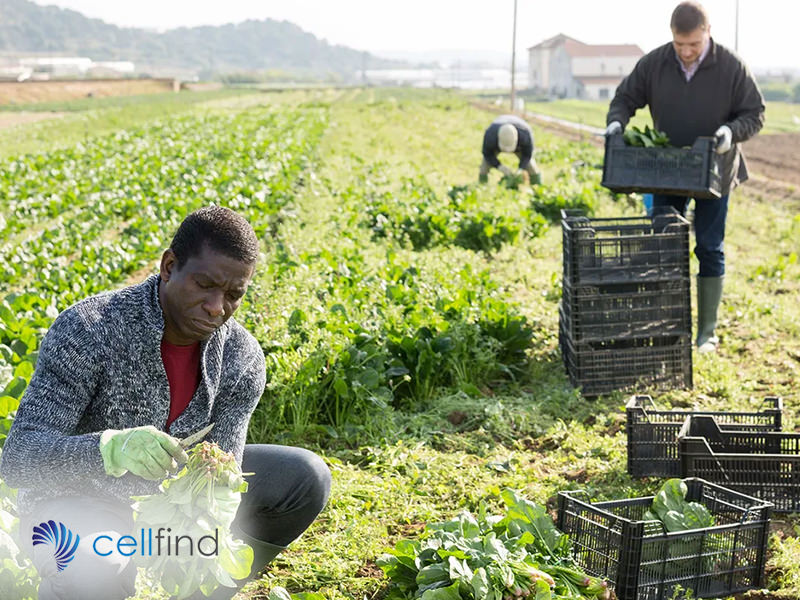
In South Africa’s agricultural sector, small-scale farmers represent a vital link in the food security chain. However, these producers often operate in remote areas where modern digital infrastructure is inconsistent. A provincial Department of Agriculture recognised that to improve rural livelihoods and increase provincial food output, they needed a direct line of communication with these farmers.
The department partnered with Cellfind to bridge the information gap, moving away from traditional, slow-moving extension services toward a real-time, mobile-first advisory model.
The Challenge: Overcoming the Connectivity Gap
Small-scale farmers face a specific set of hurdles that prevent them from competing effectively with large commercial operations. The Department of Agriculture identified three primary pain points:
- Connectivity Barriers: Many farming communities are located in areas with poor 4G or 5G coverage. High data costs also make smartphone-heavy applications or web browsing impractical for daily use.
- Market Information Asymmetry: Without access to live crop prices, farmers often rely on middlemen or local buyers who may underpay. Lacking current market data, a farmer might harvest too early or sell at a loss.
- Environmental Vulnerability: Weather patterns and pest outbreaks can destroy a season’s work in days. Traditional broadcast media (radio or TV) often provide general information that lacks the localised specificity required for a farmer to take immediate action on their specific plot.
The Department needed a solution that worked on any mobile device, even basic feature phones, without requiring a data plan or an internet connection.
The Solution: Targeted Agricultural Support via USSD
Cellfind implemented a robust USSD (Unstructured Supplementary Service Data) platform accessible via a simple *134* string. This technology was selected because it is supported by every mobile handset and works on GSM signalling channels, meaning it functions even when data signals are too weak for internet browsing.
The platform provided a menu-driven interface where farmers could access five key services:
- Live Crop Prices: Farmers could query current market rates for specific commodities. This transparency allows for better negotiation with buyers and ensures fairer trade at the farm gate.
- Localised Weather Alerts: By providing timely updates on rainfall and temperature shifts, the system helped farmers plan their planting and harvesting schedules with higher precision.
- Pest and Disease Reporting: The USSD string included a module for farmers to report sightings of invasive species or crop diseases. This data allows the Department to track outbreaks in real-time and deploy resources where they are needed most.
- Best Practice Guidelines: Agriculture is a science. The platform offered a repository of advice on soil health, irrigation techniques, and fertiliser use, tailored to the specific crops grown in the province.
- Subsidy and Grant Registration: One of the biggest hurdles for small-scale farmers is accessing government support. Cellfind integrated a registration feature that allowed farmers to apply for subsidies directly through their phones, removing the need for expensive travel to district offices.
The Business Logic: Why USSD Works for Agriculture
From a professional standpoint, the success of this project lies in the removal of friction. In business, the “last mile” of service delivery is often the most expensive and difficult. For a government department, the last mile is the rural farmer.
By utilising Cellfind’s USSD capabilities, the Department of Agriculture shifted from a reactive stance to a proactive one. Instead of waiting for farmers to seek help, the department put the tools for success directly into the farmers’ pockets. This creates a self-service ecosystem where the farmer is empowered to make decisions based on data rather than guesswork.
Impact and Results
The adoption of the system exceeded initial projections, demonstrating a high demand for accessible information. Within the first three months of implementation, the platform recorded:
- Over 500,000 USSD sessions: This high engagement rate indicates that farmers found the tool easy to use and valuable enough to return to repeatedly.
- Improved Market Positioning: Farmers reported making better pricing decisions, leading to higher profit margins per harvest.
- Yield Stabilisation: With better access to weather data and pest management advice, the province saw a decrease in crop loss among participating small-scale producers.
- Administrative Efficiency: The Department of Agriculture processed subsidy registrations faster and with fewer errors than the previous paper-based methods.
Conclusion
The partnership between the provincial Department of Agriculture and Cellfind demonstrates that effective digital transformation does not always require the latest high-bandwidth technology. It requires the right technology for the environment.
By leveraging the simplicity and reach of USSD, Cellfind helped the department turn a mobile phone into a powerful agricultural tool. This project proves that when information is made accessible, small-scale farmers can improve their productivity, secure better prices, and contribute more effectively to the provincial economy.
For organisations looking to reach users in areas with limited connectivity, Cellfind’s mobile solutions provide the necessary bridge to ensure no stakeholder is left out of the digital economy.