
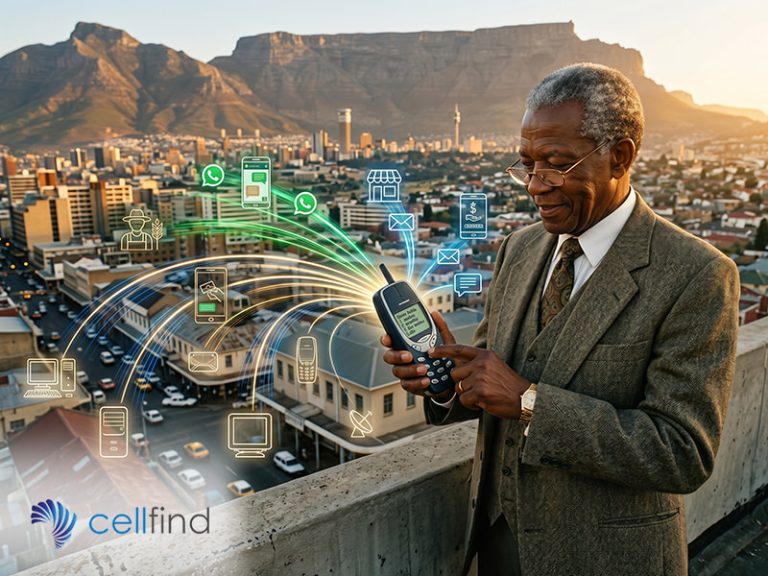
Apps crash. Data runs out. WhatsApp goes silent. But USSD? It works on every phone, every time, with zero data required. While the tech world chases 6G trials and AI-powered chatbots, a quiet revolution is happening in South Africa’s mass market. Businesses that combine USSD with modern channels are capturing millions of customers that premium-only strategies miss entirely.
Here’s what you need to know:
- 6 million South Africans remain offline or data-restricted despite 79% internet penetration
- USSD guarantees 100% reach across every GSM device in the country
- The smartest 2026 strategy uses USSD as a gateway to WhatsApp and SMS, not a replacement
- Real-world use cases now include micro-loans, utility payments, and instant customer voting
Why Does High Internet Penetration Still Leave Millions Behind?
The numbers tell a strange story. South Africa’s internet penetration sits at 79%, yet roughly 13.6 million people face persistent barriers to digital services. The answer lies in data costs and intermittent connectivity. A customer might own a smartphone but lack the R20 needed to load WhatsApp. Another might live in a rural area where 4G signal drops mid-transaction.
USSD bypasses both problems entirely. It operates on the GSM control channel, meaning it works on a R0.00 airtime balance and requires no internet connection. When your service needs to reach every customer in your database, not just the connected ones, USSD becomes non-negotiable infrastructure. The gap between nominal internet access and actual daily usage reveals why zero-data channels remain essential for mass-market reach, a fact verified by recent research.
How Do USSD, SMS, and WhatsApp Actually Work Together?
Unstructured Supplementary Service Data (USSD) functions as session-based communication between a mobile device and a network operator’s application server. Unlike SMS, which stores messages, USSD creates a real-time connection that ends when the user closes the menu. This architecture makes it ideal for transactional interactions like balance checks, airtime purchases, or service selections.
The integration model follows a logical sequence. A user dials a short code (such as *120XXX#), selects a menu option, and the system can then trigger complementary channels. SMS delivers the confirmation receipt. WhatsApp sends a rich-media follow-up with images and support links. Each channel plays to its strength within a single customer journey.
Providers like Cellfind specialise in building these multi-channel workflows through unified platforms, allowing businesses to orchestrate USSD, SMS, and WhatsApp from one dashboard rather than managing three separate systems.
| Channel | Data Required | Best Use Case | Reach | Rich Media |
| USSD | None | Instant transactions, menus | 100% of GSM devices | No |
| SMS | None | Alerts, OTPs, receipts | 100% of GSM devices | No |
| Yes | Support, catalogues, media | ~80% (data-dependent) | Yes |
What Makes USSD the “Foundation” Channel in 2026?
USSD serves as the universal entry point because it removes friction at the exact moment when customers are most likely to abandon. A prepaid electricity customer with no data can still purchase tokens. A farmer in a low-signal area can still check weather alerts. A voter can still submit feedback during a live event.
The technology operates independently of app stores, operating system updates, and storage space. It cannot be uninstalled, forgotten, or buried under notification clutter. When combined with modern backend systems, USSD delivers the reliability of 1990s infrastructure with the intelligence of 2026 platforms.
Read more: Beyond the Classroom Walls: How USSD Delivers Exam Results and Course Info
Where Are Businesses Actually Using USSD Beyond Airtime?
Micro-financial services represent one of the fastest-growing applications. Informal workers who lack bank accounts can access instant insurance claims or small-value loans through USSD menus. The transaction completes in under 60 seconds, with SMS confirmation arriving immediately afterwards.
Retailers now deploy USSD for hyper-local customer feedback. A shopper at the till receives a printed receipt with a USSD code. They dial, rate their experience in three taps, and optionally leave their number for a WhatsApp follow-up. No app download. No website visit. Just immediate, actionable data.
Prepaid utility management has become another critical use case. Customers purchase electricity or water tokens through USSD gateways, receiving both an SMS token and a WhatsApp message with usage tips. The workflow captures the transaction-heavy users (USSD) while educating the engagement-ready users (WhatsApp).
How Does the USSD-to-WhatsApp Gateway Function?
The hybrid workflow solves a specific problem: how do you move customers from universal access to rich engagement without losing them in the transition? The pattern works like this:
- Customer dials 120YOURCODE# from any device
- Menu displays options: “Buy Product,” “Check Balance,” “Chat to Support”
- Customer selects “Chat to Support”
- The system captures their number and sends an automated WhatsApp template message
- Customer clicks the WhatsApp link and continues in a rich-media environment
The key insight is that the customer initiates on their terms. They are not forced to download an app or navigate to a website. The USSD menu acts as a “decision point”, and the backend handles the handoff seamlessly. Businesses using USSD solutions report higher WhatsApp opt-in rates when users choose the channel themselves rather than receiving cold outreach.
What Is the “Power of Three” Strategy?
The Power of Three framework assigns each channel a distinct role based on technical capabilities and user context. USSD handles instant, zero-data transactions. SMS delivers high-priority alerts like one-time passwords and payment confirmations. WhatsApp provides the destination for customer support, product catalogues, and ongoing engagement.
This structure prevents channel overlap and ensures that no customer segment gets ignored. A rural user with limited data stays within USSD and SMS. An urban user with unlimited Wi-Fi graduates to WhatsApp for richer interactions. The business serves both audiences without building separate systems.
Providers that specialise in omnichannel orchestration allow companies to design these flows using low-code interfaces, reducing the technical complexity that previously made multi-channel strategies accessible only to enterprises.
Can Small Businesses Deploy USSD Without Developer Teams?
Low-code USSD platforms have democratised access to what used to require telco partnerships and custom development. Modern solutions allow businesses to build menu structures using drag-and-drop interfaces, similar to website builders. The platform handles the USSD code provisioning, carrier integrations, and backend logic.
A small retailer can launch a USSD loyalty programme in under a week. A community organisation can deploy a voting system for local elections without hiring engineers. The barrier to entry has shifted from technical expertise to strategic design: knowing what questions to ask and which workflows to prioritise.
Why Is “Inclusion” the Real 2026 Innovation Metric?
Speed and features matter less when they exclude half your addressable market. A banking app with face recognition and AI-powered budgeting tools means nothing to the 13.6 million South Africans who cannot afford the data to download it.
Innovation in 2026 is measured by reach, not just capability.
USSD ensures that no customer gets left behind due to device type, data balance, or technical literacy. It operates as the baseline layer beneath your digital strategy, catching every user that premium channels miss. The businesses winning market share are those treating USSD not as a legacy fallback, but as the foundational layer of an inclusive service architecture.
Frequently Asked Questions
Does USSD work on all mobile networks in South Africa?
Yes. USSD operates on the GSM standard, which means it functions on every South African network, including Vodacom, MTN, Cell C, and Telkom Mobile. It requires no data connection and works on the most basic feature phones.
How much does it cost to send a USSD session compared to SMS?
USSD sessions are typically free for the end user and charged per session to the business, usually ranging from R0.01 to R0.05 depending on volume and provider. This makes it cost-effective for high-frequency interactions like balance checks.
Can USSD integrate with existing CRM and payment systems?
Modern USSD platforms offer API-based integrations with most CRM, payment gateway, and database systems. The integration typically happens at the backend level, allowing USSD menus to pull live data and trigger actions in connected systems.
What is the difference between USSD and SMS for two-way communication?
USSD creates a live session where responses are instant and interactive, similar to a phone call. SMS operates asynchronously, meaning there can be delays between messages. USSD is better for real-time transactions, while SMS excels at one-way alerts.
How quickly can a business launch a USSD shortcode in South Africa?
With low-code platforms, the menu design and testing can happen in days. USSD code provisioning through mobile networks typically takes 2-4 weeks, depending on regulatory approval and carrier processing times.
The 2026 digital landscape rewards businesses that build for everyone, not just the connected elite. USSD technology provides the universal access layer that modern channels cannot replicate. When paired with SMS for alerts and WhatsApp for engagement, it creates a customer journey that loses no one to technical barriers.
Mobile technology companies operating in the South African market continue to develop omnichannel platforms that simplify the deployment of USSD alongside complementary channels. These systems allow organisations to maintain a single view of customer interactions regardless of which channel initiated the contact.
Businesses interested in expanding their addressable market can explore USSD integration as part of a broader mobile engagement strategy. A conversation with Cellfind can assist in this process.