
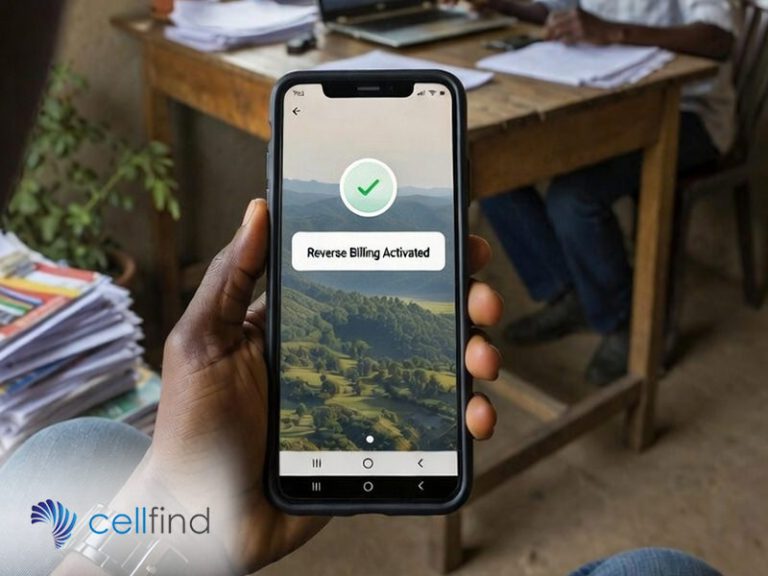
As we move into the second month of 2026, the digital landscape in South Africa faces a paradox: while mobile penetration has reached near-total saturation, the cost of staying online has hit a breaking point. Amid global memory shortages pushing smartphone bill-of-materials costs up 10–20% into 2026, South African consumers, especially in the prepaid-heavy market, are increasingly data-conscious to stretch limited bundles.
For many, a mobile device is no longer an open window to the internet, but a metered luxury where every megabyte is weighed against the cost of a loaf of bread. For businesses, this creates a Connectivity Chasm: your digital platforms exist, but your most valuable customers cannot afford the entry fee to visit them.
To bridge this gap, forward-thinking brands are moving away from traditional data-heavy strategies in favour of a Zero-Data approach. By leveraging Reverse Billed Data, enterprises are no longer just asking for a customer’s attention; they are paying for the privilege of their time, removing the data hurdle, and turning financial inclusion into their most powerful competitive advantage.
Reverse-billed data in South Africa closes that gap by shifting the cost of access from the user to the business. Here is what this article covers:
- What reverse billed data is and how it works across South African networks
- How it increases traffic and reduces bounce rates for your digital platforms
- Why it matters for SMEs and large enterprises alike
- How it supports remote workforces without costly data stipends
What is driving South Africa’s 2026 connectivity crunch?
Prepaid subscriptions comprise the vast majority of South Africa’s mobile market (80–90% across networks like Telkom), as global memory shortages push budget smartphone prices upward amid 2026 supply pressures. This continues to make devices more expensive, leaving millions of consumers with less disposable income for data.
In a prepaid market, access is not automatic — it is sponsored. Mobile usage has not slowed down, though. South Africans are still using their phones for banking, shopping, and communication. The challenge is that many arrive at your digital platforms with empty bundles or a R0.00 balance.
What is reverse billed data, and how does it work?
Reverse-billed data, also known as zero-rated data, means your business covers the cost of data when a user visits a whitelisted URL or IP address. Reverse billing effectively converts mobile networks into a sponsored access channel for your platform.
It works across all major South African networks, including Vodacom, MTN, Cell C, and Telkom. Critically, it allows users with an R0.00 balance to access your platform without any interruption, which is the real power of the model.
The setup itself is managed end-to-end by Cellfind on behalf of your business. Rather than engaging directly with multiple mobile network operators, Cellfind coordinates the whitelisting of approved URLs or IP ranges across Vodacom, MTN, Cell C, and Telkom. Once configured, qualifying traffic to those approved destinations is billed to your enterprise account at negotiated network rates, ensuring seamless access for end users without impacting their data balance.
Read more: Reverse Billed Data FAQs: Your Questions Answered
Does reverse billing actually increase traffic?
Yes. Removing a financial barrier consistently reduces bounce rates and increases session times. When users know a site is free to visit, they browse with confidence rather than watching their bundle shrink. Brands using reverse-billed data solutions report measurable improvements in conversion and engagement, particularly on product catalogues and self-service portals. Even a 5% reduction in bounce rates can materially impact digital revenue.
For high-traffic platforms such as banking apps or insurance claim portals, the effect is pronounced. Users who previously avoided the platform due to data costs become active, returning visitors. The cost of one inbound call often exceeds the cost of multiple reverse-billed sessions, making reverse billing a practical way to shift support interactions from expensive call centres to digital self-service channels.
How can SMEs use zero-data strategies to compete?
Small businesses often assume zero-rating is only for large enterprises. It is not. An SME can whitelist its ordering page or product catalogue so customers can browse for free, at no cost to the customer.
This levels the playing field directly. Your “Order Now” page becomes accessible to every South African with a phone, regardless of their data balance. That is a competitive edge that money alone does not typically buy.
Can reverse billing support your remote workforce?
Businesses are using reverse billing to give staff access to HR portals, clock-in applications, and training materials without requiring data stipends. This is particularly relevant for field workers, logistics teams, and distributed staff who rely on mobile access during shifts.
There is a compliance benefit, too. Keeping employee access on whitelisted, official channels supports POPIA-aligned data practices. Work information stays on approved platforms rather than personal apps or unsecured networks.
Read more: Reverse Billed Data Benefits: Want to Boost Your Business?
Quick reference: reverse billing benefits at a glance
| Benefit | Impact on Business | Impact on Customer |
| Increased reach | Access 100% of the mobile market | Browse even with zero airtime |
| Lower bounce rates | Users stay longer on free-to-visit sites | No anxiety about data costs |
| Financial inclusion | Brand seen as a community enabler | Digital services become affordable |
| Workforce access | Reduce data stipend costs | Employees access portals during shifts |
Frequently asked questions
Is reverse-billed data available on all South African networks?
Yes. Reverse billing is supported across Vodacom, MTN, Cell C, and Telkom. Cellfind manages the network relationships so your platform is whitelisted consistently across all providers.
How much does it cost the business?
Businesses pay enterprise data rates rather than standard consumer rates. The actual cost depends on traffic volume, and it is typically far lower than the revenue lost from users who bounce due to data costs.
Can any URL be whitelisted?
Whitelisting is managed and approved through formal agreements with each mobile network operator. Cellfind handles this entire process on your behalf — from reviewing your platform architecture to coordinating URL or IP range approvals across Vodacom, MTN, Cell C, and Telkom.
Depending on your business objective, Cellfind can configure reverse billing for specific product pages, self-service portals, APIs, or employee applications — without requiring your entire domain to be zero-rated. This ensures controlled exposure, cost management, and compliance with network policies while delivering seamless access to your users.
How long does setup take?
Implementation timelines vary by network and platform complexity. Cellfind handles the process end-to-end, including network negotiations and technical configuration.
Is this relevant for enterprise self-service portals?
Absolutely. Banks and insurers use reverse billing to redirect customers from high-cost call centres to self-service apps. The cost savings on inbound calls often offset the data cost many times over.
Let’s remove the data barrier
Data costs should not decide which customers can reach you. South Africa’s prepaid majority deserves access to your platforms without checking their bundle balance first.
Do not let data costs stand between you and your customers. Explore our reverse billing solutions to make your digital platforms accessible to all.
The connectivity crunch of 2026 is real, but it does not have to limit your reach. Reverse Billed Data in South Africa gives your business the tools to stay present on every screen, including the ones running on empty. The brands that remove barriers, not just build platforms, are the ones that earn lasting loyalty in a market where every megabyte counts.